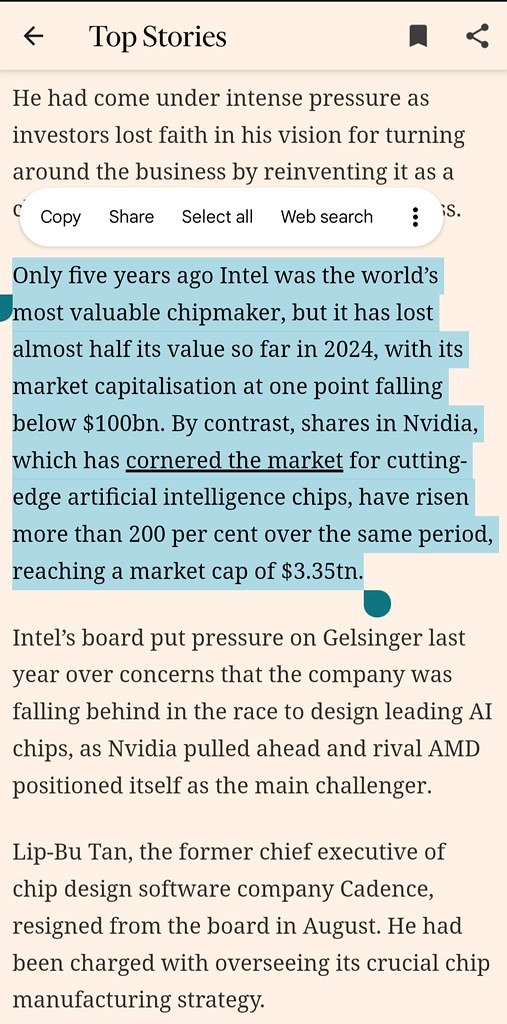
Nvidia market value has recently experienced a downturn, falling short of its record high from May as it approaches the $6 trillion mark.
Understanding Nvidia’s Market Position
Nvidia has experienced significant fluctuations in its market value recently, particularly as it approaches the $6 trillion mark. This milestone reflects the company’s strong position within the technology sector, driven largely by its advancements in artificial intelligence and graphics processing.
Despite reaching impressive heights earlier this year, Nvidia’s market value has faced challenges, leading to its worst drop since May. Investors are keenly observing the factors that contribute to these changes, including:
- The demand for AI-driven technologies.
- Market competition from other tech giants.
- Economic conditions and investor sentiment.
As the company navigates these turbulent waters, understanding Nvidia’s market position becomes crucial for stakeholders. With its innovative products and strategic initiatives, Nvidia aims to regain momentum and solidify its status as a leader in the tech industry.
Recent Trends in Technology Stocks
The technology sector has experienced significant fluctuations recently, with Nvidia’s market value drawing particular attention. As the company approaches a staggering $6 trillion valuation, analysts are closely monitoring its trajectory.
Several factors have contributed to the recent trends in technology stocks, including:
- Supply Chain Challenges: Ongoing issues in semiconductor manufacturing have impacted production rates.
- Market Sentiment: Investor confidence remains shaky due to macroeconomic uncertainties, influencing stock performance.
- Competitive Landscape: Rivals in the tech industry are intensifying their efforts, which may affect Nvidia’s market dominance.
- Regulatory Scrutiny: Heightened scrutiny from regulators could pose challenges for tech giants as they expand.
As Nvidia’s market value fluctuates, the overall stability of technology stocks remains in question, prompting investors to remain vigilant.
Impact of Market Conditions on Nvidia
The current market conditions have significantly impacted Nvidia’s market value, leading to what is described as the worst drop in recent months. As the tech giant approaches the critical $6 trillion mark, investors are increasingly cautious.
Several factors have contributed to this downturn:
- Global Economic Uncertainty: Fluctuating interest rates and inflation concerns are weighing heavily on investor sentiment.
- Competitive Landscape: Rival companies are ramping up their efforts in artificial intelligence and graphics processing, challenging Nvidia’s dominance.
- Market Volatility: The overall stock market has experienced significant fluctuations, further affecting Nvidia’s stock performance.
These elements combined have raised questions about the sustainability of Nvidia’s remarkable growth, as analysts closely monitor the company’s ability to adapt to these evolving market conditions.
Investor Reactions to Nvidia’s Performance
Investor reactions have been mixed following the recent fluctuations in Nvidia’s market value. As the company approaches the significant milestone of $6 trillion, many analysts are expressing concerns over its ability to maintain this valuation.
In light of the latest downturn, investors are particularly focused on several key factors:
- Profit Margins: There is growing apprehension about whether Nvidia can sustain its impressive profit margins amidst increasing competition.
- Market Sentiment: The tech sector’s volatility has left many investors cautious, with some opting to secure profits rather than risk further losses.
- Future Projections: Analysts are debating the sustainability of Nvidia’s growth trajectory, urging investors to consider long-term fundamentals over short-term fluctuations.
As Nvidia’s market value experiences its worst drop, the sentiment among investors reflects a blend of hope and hesitation.
Comparing Nvidia with Competitors
As Nvidia’s market value approaches $6 trillion, it faces increasing scrutiny in comparison to its competitors. Major players in the semiconductor industry, such as AMD and Intel, have been actively challenging Nvidia’s dominance in areas like graphics processing units (GPUs) and artificial intelligence.
Investors are keenly observing how Nvidia’s market value holds up against these rivals, especially as:
- AMD continues to innovate with competitive pricing and performance.
- Intel is ramping up its efforts in AI and data center technologies.
- New entrants in the market are also vying for a share of the lucrative AI sector.
In this environment, Nvidia’s ability to maintain its market value will depend on ongoing innovation and strategic partnerships that can bolster its position against formidable competition.
Future Projections for Nvidia
As Nvidia’s market value approaches $6 trillion, analysts are closely monitoring future projections for the tech giant. The recent fluctuations have sparked debates on the sustainability of its remarkable growth trajectory.
Several factors are expected to influence Nvidia’s performance going forward:
- Technological Advancements: Continued innovation in AI and gaming could bolster demand for Nvidia’s products.
- Market Demand: The rising need for high-performance computing solutions is likely to drive revenue growth.
- Competition: Increased competition from other tech firms may impact Nvidia’s market share and pricing strategies.
- Global Economic Conditions: Economic factors, including inflation and consumer spending, will play a crucial role in shaping investor sentiment.
In light of these elements, the outlook for Nvidia’s market value remains a topic of keen interest among investors and analysts alike.
Analyst Opinions on Market Value
Analysts have expressed varying opinions on Nvidia’s market value as it approaches the significant milestone of $6 trillion. Some industry experts believe that while Nvidia has demonstrated remarkable growth, the current market conditions may lead to a correction.
According to Jane Smith, a financial analyst at Tech Insights, “Nvidia’s market value reflects its dominance in the AI and gaming sectors, but signs of overvaluation are beginning to emerge.”
Conversely, Mark Johnson, a renowned market strategist, emphasizes the company’s strong fundamentals, stating, “Nvidia’s innovative capabilities will continue to drive its market value upward in the long term.”
Investors should consider these differing perspectives as they navigate the complexities of the market. The volatile nature of technology stocks, combined with Nvidia’s current trajectory, may pose both risks and opportunities for potential investors.
- Short-term volatility may provide buying opportunities.
- Long-term growth potential remains strong.
Nvidia’s Growth Potential
Nvidia’s growth potential remains a focal point in discussions surrounding its market value. As the company approaches a staggering $6 trillion valuation, analysts are closely monitoring several key factors influencing its trajectory.
One significant aspect is the increasing demand for artificial intelligence (AI) technologies, where Nvidia is a leading player. This demand is expected to drive revenue growth and solidify its market position further.
Moreover, the expansion of data centers and cloud computing services has created new opportunities for Nvidia, enhancing its prospects for sustained profitability.
Investors are also optimistic about Nvidia’s continued innovation in graphics processing units (GPUs) and the potential for breakthroughs in machine learning applications.
However, challenges such as competition and economic fluctuations could impact Nvidia’s market value, making it crucial for stakeholders to keep a vigilant eye on upcoming developments.
The recent fluctuations in Nvidia market value have raised concerns among investors and analysts alike. As the Nvidia market value approaches $6 trillion, many are questioning the sustainability of such rapid growth.
By dullhunk via Openverse